As an SEO Writer, I stay up-to-date with the latest SEO practices and industry insights to craft content that is search-optimized, credible, and genuinely valuable, designed to perform at its best on SERPs.
Collaborator
Perplexity AI vs ChatGPT: Which Is Better for Business Needs?
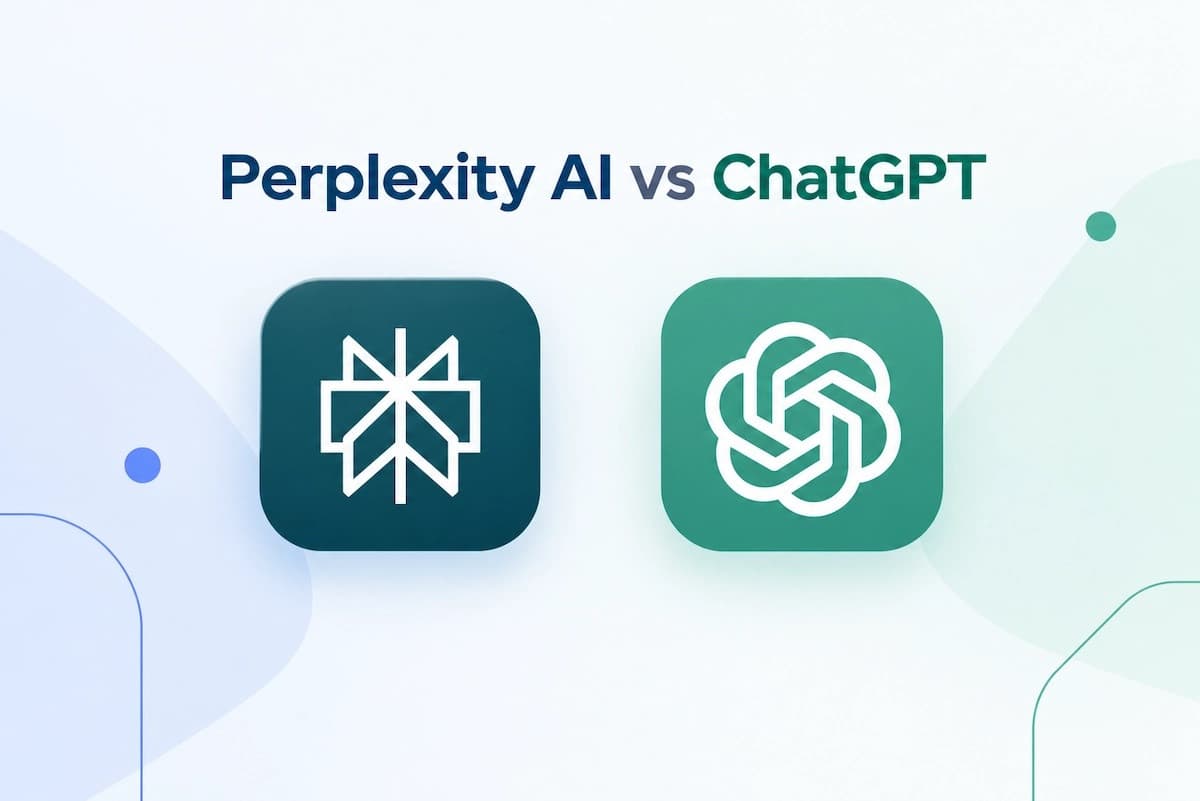
Perplexity AI and ChatGPT are two AI platforms that can help users find information, conduct research, create content, and even complete a wide range of tasks. Both are also increasingly used to help users understand product and service options and get the information they need before making a decision.
Although their functions intersect, Perplexity AI and ChatGPT take different approaches. These differences show up in each platform's grounding mechanism, research capabilities, data analysis, and agentic AI features.
So, what are the differences between Perplexity AI and ChatGPT, and which platform better suits your needs? Read on for the full breakdown below!
Perplexity AI and ChatGPT: An Overview
Perplexity AI was developed in 2022 and is known as an answer engine that searches the web to produce answers with verifiable sources. Perplexity states that every answer is grounded in real-time web sources and comes with citations. According to Counterpoint Research, Perplexity had around 45 million monthly active users in the first quarter of 2026.
Meanwhile, OpenAI introduced ChatGPT in November 2022. Since its launch, ChatGPT has evolved from a conversational chatbot into an AI platform that includes Search, Deep Research, file and data analysis, image generation, coding, and a range of agentic AI capabilities. As for its user base, OpenAI states that ChatGPT has reached more than 1 billion weekly active users in 2026.
Perplexity AI vs ChatGPT: A Comparison
So, what's the difference between ChatGPT and Perplexity? Perplexity and ChatGPT have almost the same features. However, the experience and capabilities each one offers differ in several aspects, as outlined below:
Aspects | Perplexity AI | ChatGPT |
| Pricing | Free, Pro, Max, and plans for organizations | Free and paid plans with different features and usage limits |
| Grounding & Citation Approach | Web search is a core part of the product, and answers come with citations | Search and Deep Research can pull information from the web and include sources |
| Research Capabilities | Pro Search, Deep Research, and source-based search | Search and Deep Research |
| Answer Quality | Designed for searching and synthesizing information from the web | Broader coverage across conversation, reasoning, writing, analysis, and search |
| Data Analysis | Supports file analysis and file/app creation | Supports data, file, and spreadsheet analysis, as well as code execution |
| Ecosystem & Integration | Multi-model, Comet, Computer, and Create files and apps | Custom GPTs, Apps, Work, Codex, dan berbagai kemampuan multimodal |
| Coding | Supports coding and app building | Supports coding, debugging, code analysis, and code execution |
| Asset Creation | Creation of files, apps, images, and other features on certain plans | Creation of text, images, files, and various other outputs |
| Agentic AI | Perplexity Computer and Comet | A range of agentic capabilities and Workspace Agents |
| Memory | Memory and Brain to retain work context, with availability depending on the feature or plan | Memory to store certain information and preferences, depending on settings and plan |
Read also: Generative Engine Optimization (GEO): Definition & Strategies 2026
Perplexity AI vs ChatGPT: Detailed Differences
Now that you have a general idea of how the two compare, here is a more detailed explanation to help you decide which platform best fits your business needs.
1. Search and Citation Approach
Perplexity is built with a search-first approach. It retrieves information from the web and provides answers with citations, so users can immediately check the sources behind each claim. Perplexity also states that its search uses a continuously updated web index to produce answers based on current information.
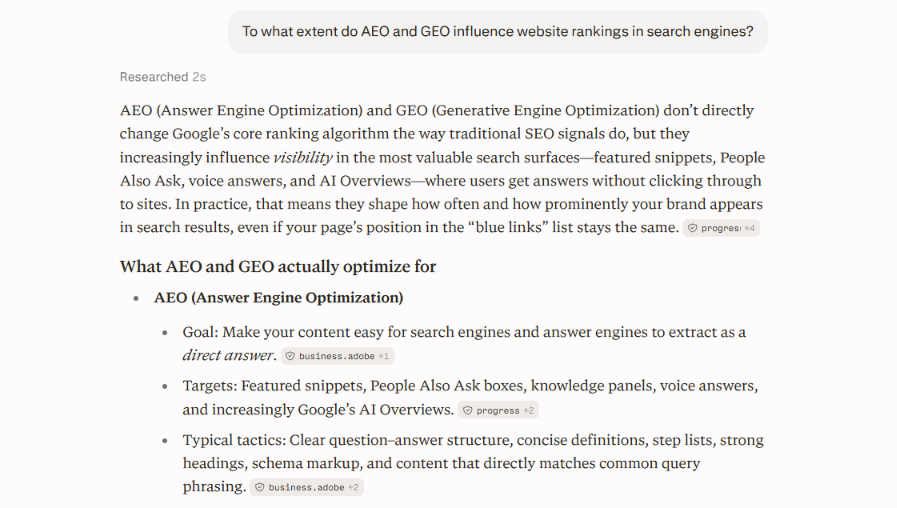
On the other hand, ChatGPT uses the web as one of its capabilities within a conversation. With ChatGPT Search, users can ask for up-to-date information and receive answers that come with sources. The search can then be continued in the same conversation, for example by asking for the information to be compared, summarized, analyzed, or turned into a specific output.
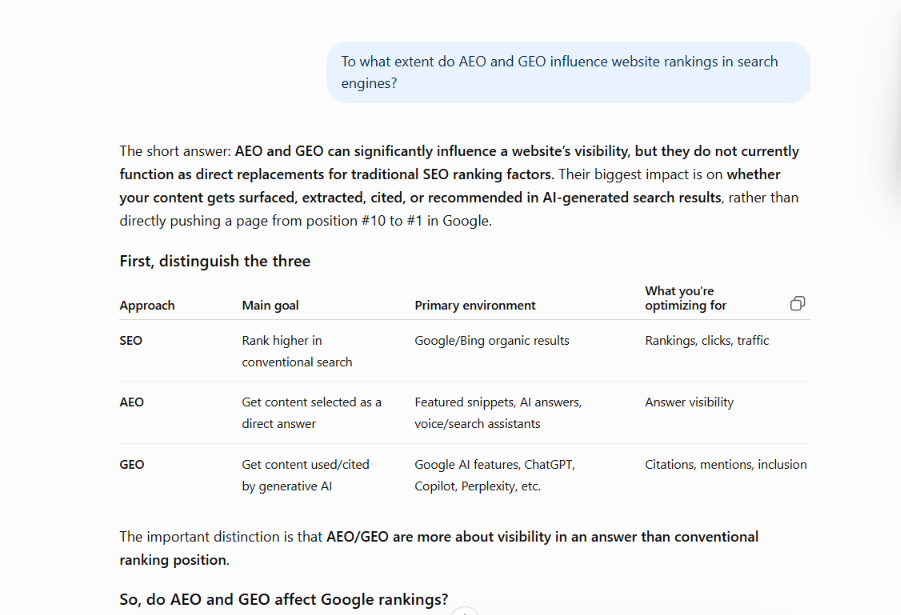
2. Research and Answer Quality
Perplexity has a Pro Search feature for deeper searches that synthesize multiple sources at once, as well as a Deep Research feature that breaks complex questions down into multiple search steps and produces reports with citations.
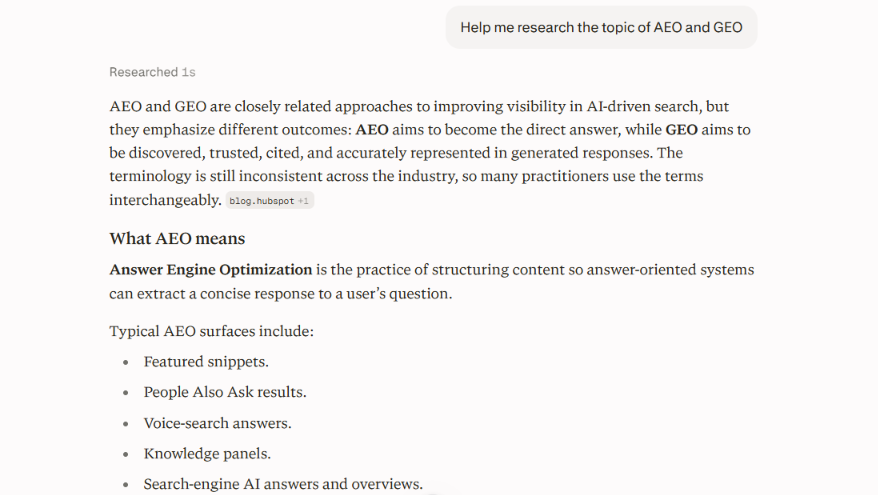
In other words, Perplexity is a better fit when your goal is to get source-based research results quickly, for example, to look up market trends, compare competitors, or gather references from various sites.
ChatGPT has Search for relatively quick lookups and Deep Research for tasks that require multi-step research. Users can also specify the sites or files they want to use as sources.
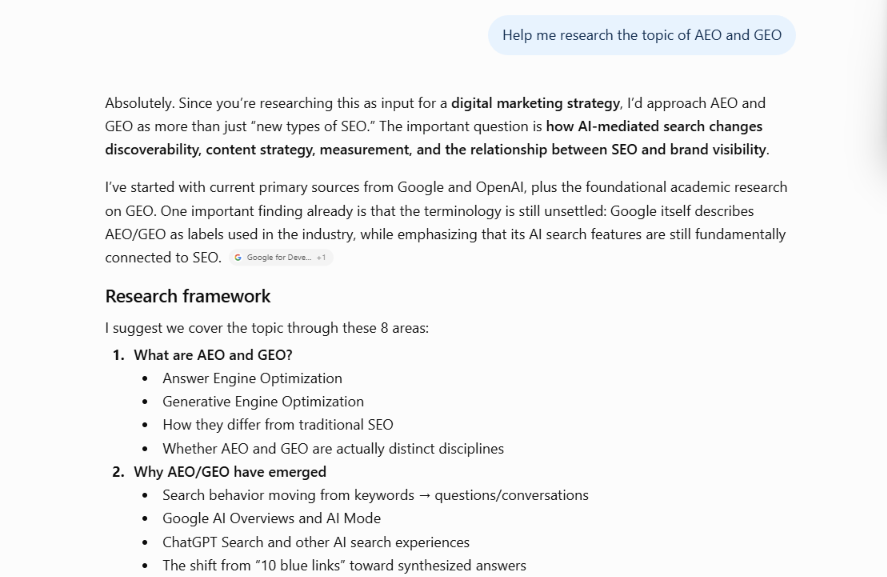
In conclusion, you can take ChatGPT's research results into the conversation to analyze, critique, summarize, or develop them into a strategy or other outputs.
Read also: What Is Answer Engine Optimization (AEO)? A Guide to Optimizing Business
3. Coding and Data Analysis
Both Perplexity and ChatGPT can be used to help with coding and data analysis. However, their capabilities and user experience can differ depending on the model, features, and plan being used.
For example, ChatGPT can be used to analyze data and files and to run code in certain workflows. On the other hand, Perplexity can offer file analysis and a Create files and apps feature in its product.
However, some research shows that ChatGPT tends to deliver better results in coding and data analysis tasks, while Perplexity is stronger in search and research, especially for certain tasks
4. Content and Assets Creation
ChatGPT can be used to create many types of content, from articles, campaign ideas, and summaries to images. The platform can also work with files and help develop outputs based on the conversation.
Along the same lines, Perplexity also offers a Create files and apps feature for building files and applications, while certain plans provide capabilities such as image generation.
5. Agentic AI
Agentic AI lets AI handle a series of tasks on its own, with less need for you to step in. Perplexity's Computer runs tasks step by step, and OpenAI is also developing agentic features for personal and professional use.
Perplexity continues to develop Computer with capabilities such as Brain, subagents, app integrations, and automation. On the other hand, OpenAI says its agentic products include ChatGPT, ChatGPT Work, Codex, and Workspace Agents.
6. Ecosystem and Integrations
Perplexity and ChatGPT have both evolved from chatbots into AI platforms with a wide range of features and integrations. While Perplexity is building an ecosystem focused on search, research, and task execution through features like Comet, Computer, and Create files and apps, ChatGPT is building a broader ecosystem for many types of work through Custom GPTs, Apps, Codex, multimodal capabilities, and even file and data analysis.
The difference is that Perplexity works best for workflows that start with search and research, whereas ChatGPT offers a more general-purpose ecosystem for processing information and producing a wide range of outputs.
7. Memory and Personalization
ChatGPT has a Memory feature that allows the system to remember certain information and preferences so it can give more relevant responses. Similarly, Perplexity is also developing Memory and Brain to retain context from previous work.
When it comes to memory and personalization, ChatGPT tends to put more emphasis on personalizing interactions, while Perplexity develops memory as part of context and workflow continuity.
Read also: Gemini vs ChatGPT for Business: Which to Choose?
Perplexity AI vs ChatGPT: Which Is Better for Business?
So, which is better, Perplexity AI or ChatGPT? In general, Perplexity is better for tasks like finding information, doing web-based research, and tracing sources, while ChatGPT can be used for analysis, content creation, coding, and even idea development.
That said, a business doesn't have to pick just one. You can use both in the same workflow. For example, you can use Perplexity to find and validate information, then use ChatGPT to analyze the results, build a strategy, or turn them into ready-to-use outputs.
So, while you're using Perplexity and ChatGPT to support your business operations, why not make the most of both to boost your business's AI visibility as well?
That way, when potential customers use AI to look for information and product or service recommendations, your business can show up as the answer, either as an AI citation or a mention.
Is It Better to Get AI Citations & Mentions from Perplexity or ChatGPT?
Citations and mentions from Perplexity can help a business gain visibility when its content or website is used as a reference in AI answers.
Meanwhile, with ChatGPT, a brand benefits when it's recommended in a user's search. So, neither platform is better across the board. Citations on Perplexity and mentions or citations on ChatGPT can both be valuable, as long as they show up in a context that's relevant to your audience and your business.
Read also: ChatGPT vs Claude: Comparison & Optimization Strategies for Business
How to Get Your Business Cited & Recommended on Perplexity and ChatGPT
To improve your business's chances of earning citations and mentions on Perplexity and ChatGPT, the first step is to check and audit your AI visibility. cmlabs offers a FREE AI Visibility Audit that can help you identify how your business appears across different AI platforms.
The audit takes only about 3-5 business days, is 100% free, and comes with no contract. Once you know where your AI visibility stands, you can also use AI Search Optimization (GEO/AEO) service by cmlabs.
cmlabs's GEO service can help your business boost its visibility on your target AI platforms with an approach tailored to your business needs.
Our optimization approach and strategy will also be adapted to the AI platform you want to target, since each AI processes information, selects sources, and performs grounding differently. We will optimize all technical aspects, from entities and schema markup to citations, based on your business needs.
If you want to find out which strategy best fits your business, or get more information about our AI Search Optimization service, feel free to contact our team.

Risca Fadillah
Thank you for taking the time to read my article! At cmlabs, we regularly publish new and insightful articles related to SEO almost every week. So, you'll always get the latest information on the topics you're interested in. If you really enjoy the content on cmlabs, you can subscribe to our email newsletter By subscribing, you'll receive updates directly in your inbox. And hey, if you're interested in becoming a writer at cmlabs, don't worry! You can find more information. here So, come join the cmlabs community and stay updated on the latest SEO developments with us!
Subscribe to Our Newsletter
Enter your email to receive news from us