As an SEO Writer, I stay up-to-date with the latest SEO practices and industry insights to craft content that is search-optimized, credible, and genuinely valuable, designed to perform at its best on SERPs.
Collaborator
ChatGPT vs Claude: Comparison & Optimization Strategies for Business
ChatGPT and Claude are two AI assistants increasingly used for any needs, from searching for information and analyzing documents to supporting work and business. Both are steadily improving, but they offer different features and experiences.
For a company, comparing ChatGPT vs Claude is not only about which AI is best suited to support users' work. Both can also become a new channel for potential customers to look for information, compare solutions, or even ask for product and service recommendations.
This article will discuss the comparison between the two AIs from various angles, and how your business can get recommended on these platforms. So, let's read this article through to the end!
ChatGPT and Claude at a Glance
ChatGPT is an AI assistant from OpenAI that was introduced in November 2022. Since its launch, its usage has continued to grow globally. According to OpenAI Signals, ChatGPT's monthly active user base has exceeded 1 billion users worldwide as of 2026.
Meanwhile, Claude is an AI assistant developed by Anthropic and was widely introduced in March 2023. As it has evolved, Claude has also been increasingly adopted by companies. Anthropic states that it has served more than 300,000 business customers as of October 2025, which shows that Claude is used not only for personal needs, but also for a variety of business and enterprise needs.
Comparing ChatGPT vs Claude
ChatGPT and Claude can be used to search for information, create and analyze content, process documents, and even assist with technical work. Here is a comparison of ChatGPT vs Claude across several components:
Components | ChatGPT | Claude |
| Features | Chat, image generation, Projects, custom GPTs, Tasks, Work, Codex | Chat, Projects, Artifacts, Research, Claude Code, Cowork |
| Pricing | Go starts at $8, Plus $20, Pro $100/$200 per month | Free, Pro $20/month or $17/month if billed annually, Max starts at $100 |
| Grounding and Citation Method | Web search with sources/citation | Web search and citations on results that use sources |
| Research Capability | Deep research | Research |
| Answer Quality | Flexible for various types of work and output formats | Strong for long-form writing, analysis, and context-based work |
| Data Analysis Capability | File analysis and running code to process data | Data analysis and visualization through Artifacts |
| Ecosystem & Integration | Connectors, custom GPTs, Work, Codex, various integrations | MCP, Google Workspace and Microsoft 365 integrations, and other tools |
| Coding Capability | Codex | Claude Code |
| Asset Creation | Text, images, files, and various structured outputs | Text, documents, dashboards, and interactive artifacts; no native image generation |
| Agentic AI | ChatGPT Work and agent | Claude Cowork and computer use |
| Memory | Available, with capabilities that differ by plan | Available, including on the Free plan |
Please also keep in mind that the prices and features available on both AIs above may change, because the companies continue to update their products. Currently, ChatGPT has Go, Plus, and two Pro tiers, while Claude offers Free, Pro, and Max.
Read also: What Is Answer Engine Optimization (AEO)? A Guide to Optimizing Business
Key Differences in Claude vs ChatGPT
The differences between ChatGPT and Claude go beyond their model capabilities. Each AI tool has its own strengths, response style, and use cases. Take a closer look at how ChatGPT and Claude compare below:
1. Writing Quality and Response Style
Based on insights from several sources, Claude is often regarded as having a more natural and nuanced writing style, particularly for creative and editorial work. This makes it a popular choice for writing-related tasks. However, users still report some limitations in its output, so its suitability may vary depending on the type of content and purpose.
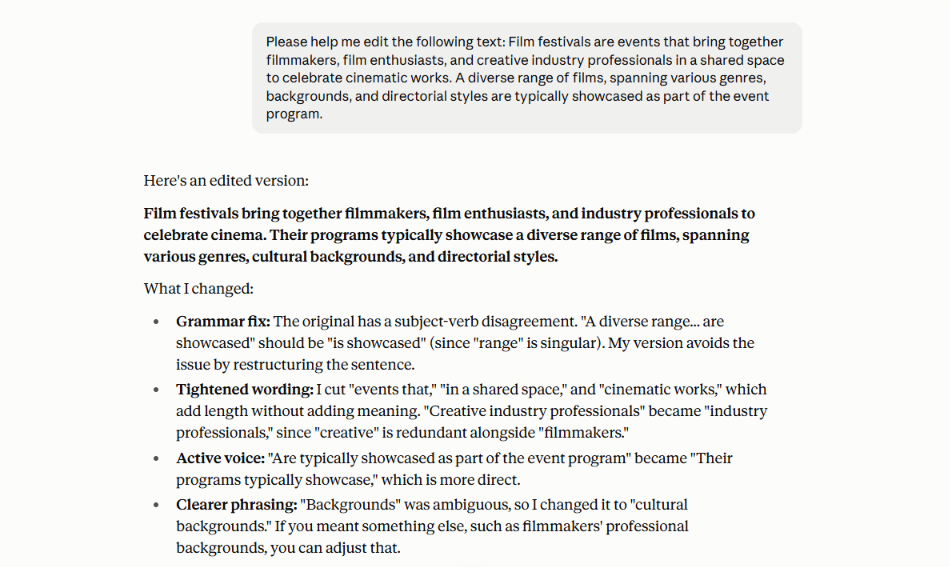
Meanwhile, ChatGPT offers more options for modifying and developing its output. For a marketing team, for example, a single workflow can include writing copy, analyzing data, drafting documents, and even creating visuals.
Therefore, the difference is better understood in terms of the workflow a company needs, rather than assuming that one of them always produces better writing.
Read also: SEO Article Writing Experiment: AI vs Human
2. Coding Capability
Coding is also one of the most widely compared features, because each of these two AI platforms has its own coding agent: Codex on ChatGPT and Claude Code on Claude.
Anthropic has Claude Opus 4.6, which is designed for coding, code review, debugging, and longer-running agentic work. The model also supports a context window of up to 1 million tokens in its beta version.
On the other hand, Codex on ChatGPT is intended for work such as writing, fixing, and refactoring code. Differences in results can depend on the type of task, the specifications provided, the model used, and the developer's workflow.
3. Image and Asset Creation
One of the clearest differences is the ability to generate images. ChatGPT has the GPT Image 2 model, which can create and edit images from user instructions.
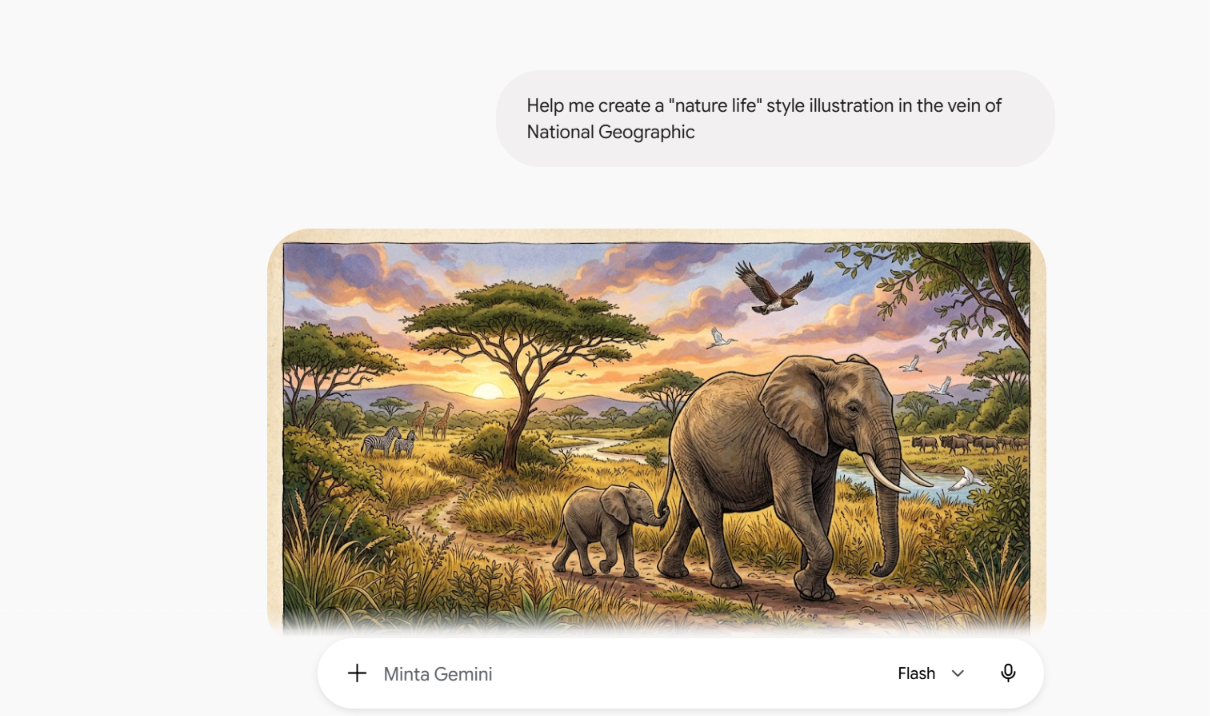
Meanwhile, Claude does not offer native image generation. Here is the result Claude produced for the same prompt:
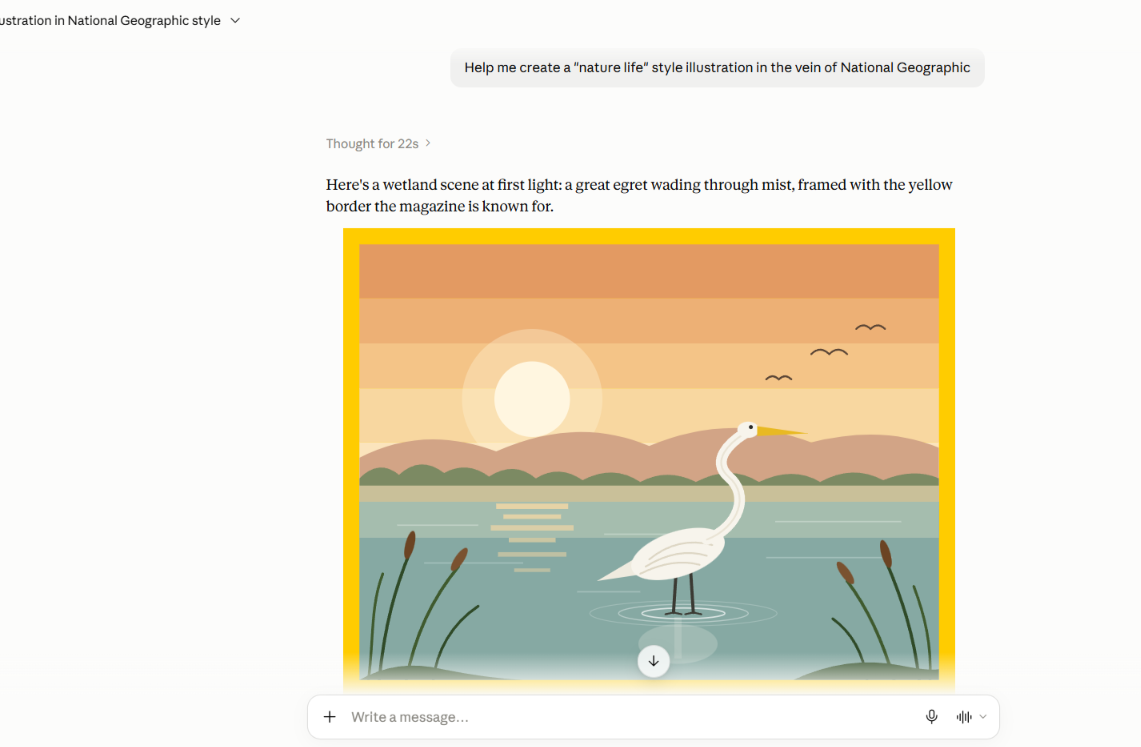
However, Claude has Artifacts, which can be used to produce documents, data visualizations, dashboards, and interactive apps within a conversation.
4. Agentic AI and Ecosystem
Both AI platforms have evolved from simple chatbots into AI that can help complete multi-step tasks. ChatGPT offers Work and agent capabilities for handling workflows involving the web, documents, and tools. Claude has Cowork and computer use, which allow Claude to interact with a computer and carry out tasks based on the context it is given.
Integration is also an important factor for companies. ChatGPT has connectors and a variety of integrations, while Claude supports MCP as well as integrations with tools such as Google Workspace and Microsoft 365.
5. Memory and Research Capabilities
Both AIs offer features to support work that requires longer context. ChatGPT has memory and Deep Research, while Claude provides memory, Projects, and Research.
Claude also has Opus 4.6 and Sonnet 4.6, which support a context window of up to 1 million tokens in beta under certain conditions.
For a company, these capabilities can be useful when the AI has to work with documents, knowledge bases, research results, or lengthy project information. However, a large context window does not automatically make the output more accurate. Reference quality and instructions matter too, so you should still verify and fact-check the results.
6. Pricing and Usage Limits
In terms of price, the subscription costs of these two AI platforms are relatively close. ChatGPT offers Go starting at $8 per month, Plus at $20, and Pro at $100 and $200. Claude has Pro at $20 per month, or $17 per month if paid annually, while Max starts at $100 per month.
Before subscribing, it's best not to rely on subscription prices alone. Usage frequency, model needs, usage limits, integration needs, and the type of work you want the AI to handle are also worth considering
ChatGPT vs Claude: Which Is Better for Business?
If you're asking which is better, Claude or ChatGPT, the choice can be tailored to your workflow, type of work, integration needs, and the features you use most often.
ChatGPT works well for workflows that need several capabilities in one place, such as data analysis, image generation, research, and automation. On the other hand, Claude can be considered for work that involves a lot of long documents, writing, coding, or context-based workflows.
In a company setting, both AIs can also be used at the same time for different needs. For example, one team might use Claude for document-based work and coding, while another team uses ChatGPT for research, data analysis, or creating visuals.
Beyond supporting internal work, there's another factor companies increasingly need to consider when it comes to AI: how does your business show up when potential customers look for information through it?
ChatGPT and Claude are not just productivity tools. When users ask for recommendations for products, vendors, software, or services, the AI's answer can become part of the consideration process before they visit a website or contact a company.
ChatGPT or Claude: Which Is Better for AI Citations & Mentions?
AI citations and mentions can be part of an AEO and GEO strategy to expand a business's AI digital visibility. However, which platform to prioritize still depends on your target audience and how users use AI to search for information.
With a large and diverse user base, visibility on ChatGPT is quite relevant for businesses targeting the consumer market, a broad audience, or international markets.
On the other hand, Claude is widely used in professional and enterprise contexts, so visibility on this platform can be relevant for businesses targeting developers, SaaS, technology, B2B services, or audiences with a more in-depth research process.
However, the value of citations from both AI platforms still depends on whether your target audience actually uses Claude or ChatGPT in their research and decision-making process.
How to Get Cited & Recommended in ChatGPT and Claude
AI citations and mentions are metrics you must measure if you want to build your business's digital visibility in the age of AI Search, especially when optimizing for ChatGPT, Claude, or other AI platforms. To make your strategy more targeted, you can start with a FREE AI Visibility Audit from cmlabs to learn your brand's current AI visibility. The audit is free, requires no contract, and results will be delivered in about 3-5 business days.
For further optimization, you can use the AI Search Optimization (GEO/AEO) service by cmlabs to improve your visibility on your target AI platforms, including ChatGPT or Claude. Our strategy always adapts to the characteristics of each AI, because every platform has its own treatment and way of grounding information.
If you'd like to know which strategy best fits your business needs, you can contact our team to discuss, learn more about our services, or request a customized scope of service.

Risca Fadillah
Thank you for taking the time to read my article! At cmlabs, we regularly publish new and insightful articles related to SEO almost every week. So, you'll always get the latest information on the topics you're interested in. If you really enjoy the content on cmlabs, you can subscribe to our email newsletter By subscribing, you'll receive updates directly in your inbox. And hey, if you're interested in becoming a writer at cmlabs, don't worry! You can find more information. here So, come join the cmlabs community and stay updated on the latest SEO developments with us!
Subscribe to Our Newsletter
Enter your email to receive news from us