As an SEO Writer, I stay up-to-date with the latest SEO practices and industry insights to craft content that is search-optimized, credible, and genuinely valuable, designed to perform at its best on SERPs.
Collaborator
AI Citation: Definition, How It Works, and How to Get It

Have you ever asked ChatGPT or Google AI Overview a question, then seen the answer backed by clickable source references? That reference is what's called an AI citation, a signal that determines whether your brand is considered credible by AI systems or never mentioned at all.
So, how does AI actually decide which pages deserve to be cited? This article will thoroughly cover what AI citation is, how it works, its types, and practical strategies to give your brand a better chance of being cited by AI. So, let's dive into the details below!
What Is AI Citation?
Simply put, an AI citation is a link or reference to a specific source that an AI system uses to compose or support an answer. These references typically appear as footnotes, source cards, or inline links within the AI's response.
So, what does this actually look like? For example, in Google AI Overview, AI citations appear on the right side of the answer as clickable source cards that users can click on directly.
Meanwhile, on ChatGPT, AI citations generally appear inline within the answer text, complete with sources that users can open at any time.
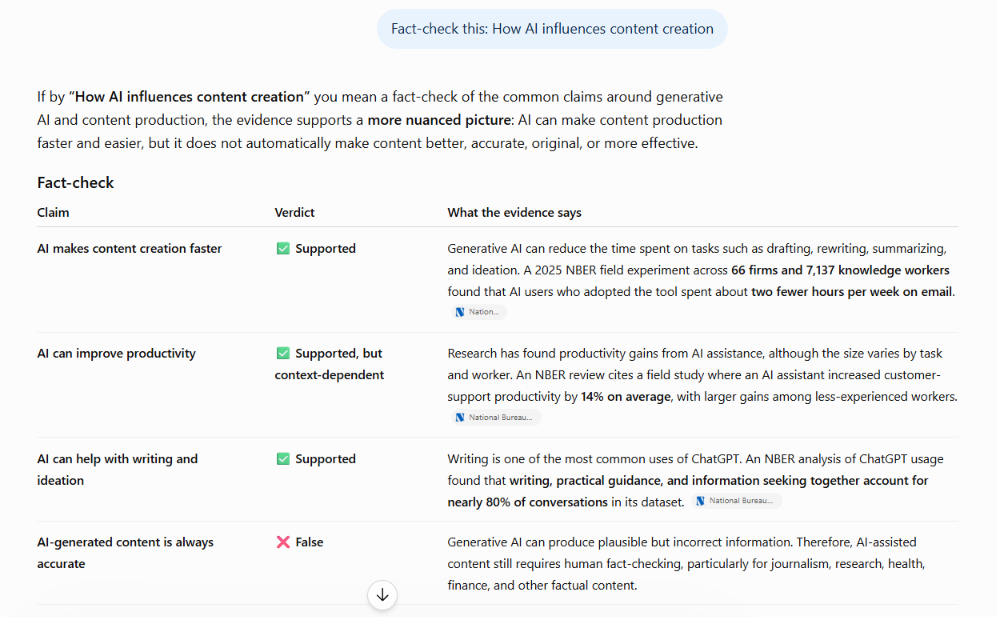
You should also note that a general reference to a brand without a link or source attribution is called an AI mention, not an AI citation. The two are often mixed up, even though their functions are quite different, as we'll discuss further later on.
Why AI Citation Matters for Business
As AI answers become the main entry point for search, AI citation is turning into one of the most influential factors in the new organic visibility metrics for businesses. So, what's the benefit for your brand if it gets cited by AI? Here's why it matters.
1. Authority
Just like backlinks serve as a trust signal in traditional SEO, AI citation shows that your brand is considered a credible source by AI systems.
2. Engagement
In AI-based search, users may never see the blue links typically found on SERP pages. As a result, information from your website page gets cited directly instead.
3. Differentiation
When several brands offer similar content to competitors, the brand that gets cited ends up capturing the most visibility.
Worth noting, research has also found that most AI citation sources actually come from assets a brand can control or influence itself, such as its website, listings, and third-party profiles.
This means your business has real room to influence how often it gets cited by AI, rather than just waiting on luck.
Read also: Google Gemini AI: Features & Best Practices for Business
How AI Citation Works
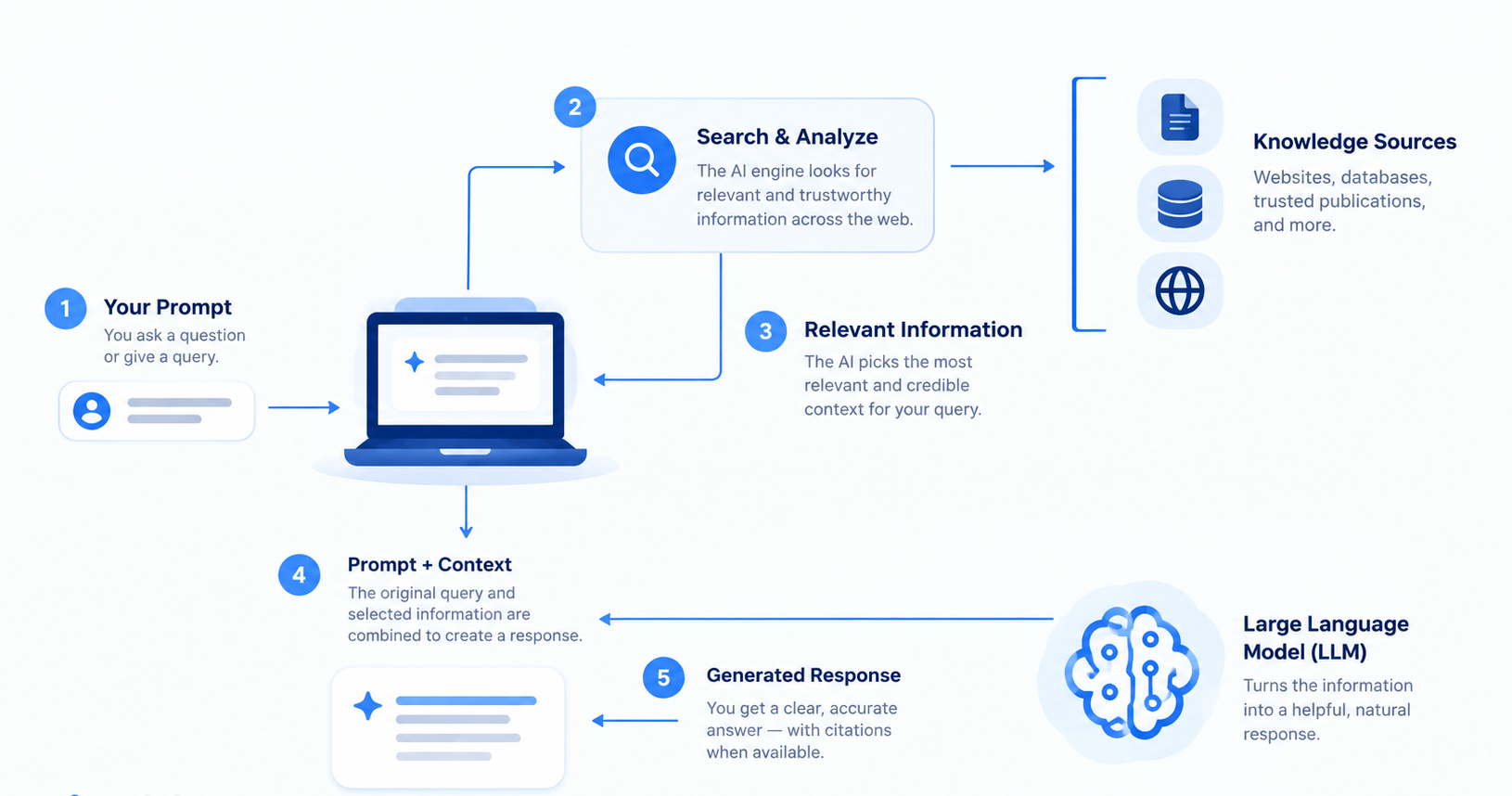
Before building a strategy, you first need to understand how AI systems decide which sources deserve to be cited.
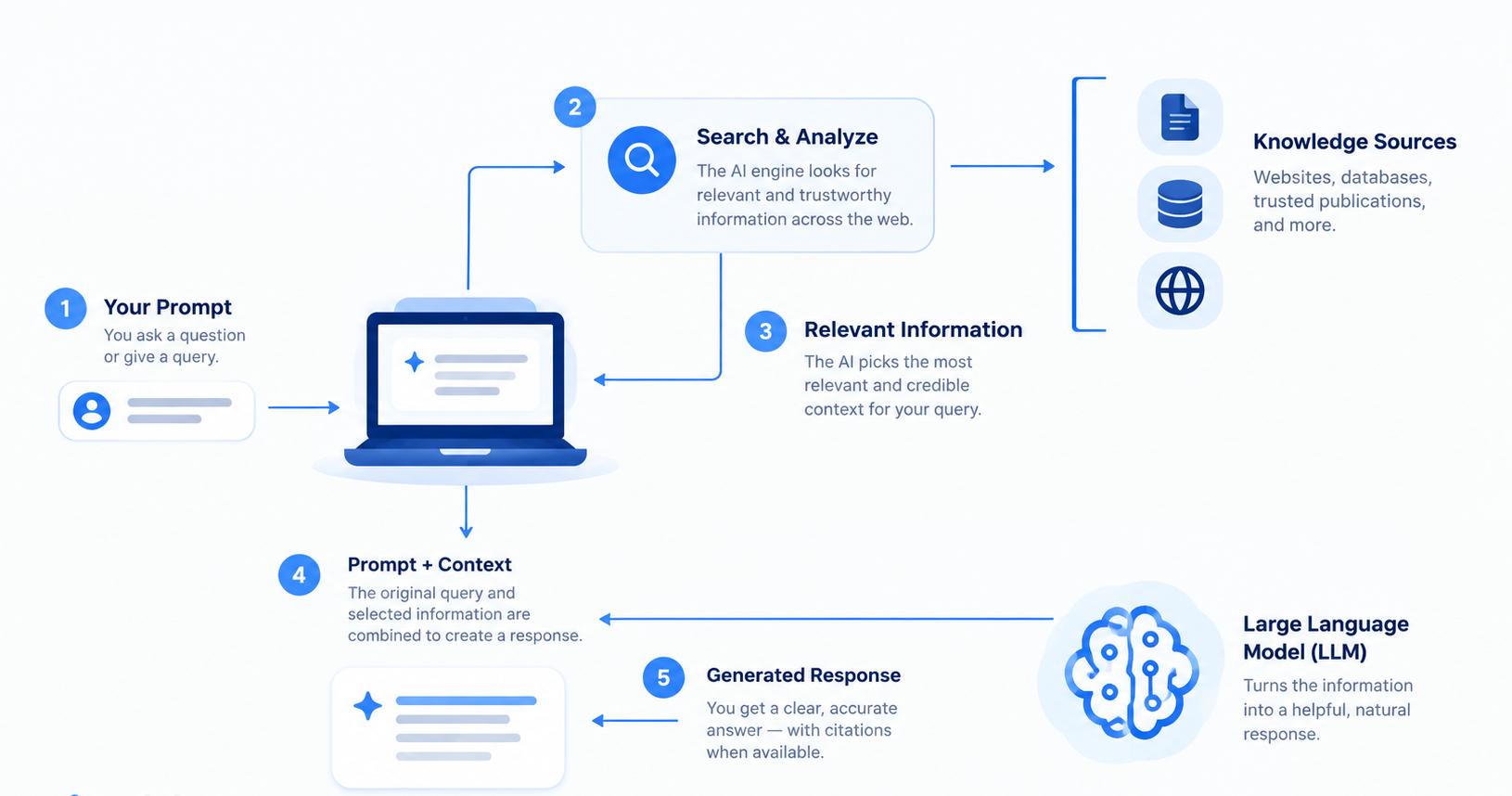
Most AI-based search engines use an approach called Retrieval-Augmented Generation or RAG, a process where the AI doesn't just answer from memory, but instead searches, evaluates, and compiles information from various sources first.
Here's what the process typically looks like:
1. Query Understanding
The AI model will first interpret the user's intent behind the query, whether it's informational, navigational, or commercial. This stage determines the type of sources the system will look for.
2. Source Retrieval
The system then pulls possible sources from web indexes, training data patterns, or real-time data retrieval systems, depending on the platform being used.
3. Source Evaluation
Not all sources are judged equally. The AI assesses relevance to the query, authority and trust signals, clarity of information structure, and the credibility of the entity or author behind it.
4. Answer Synthesis
Rather than just displaying a list of links, the AI also combines insights from multiple sources into one cohesive answer. Your content may get used at this stage even if it isn't always explicitly cited.
5. Citation Selection
The AI model then decides which sources get cited explicitly with a link, and which are used without direct attribution.
E-E-A-T, short for Experience, Expertise, Authoritativeness, and Trustworthiness, becomes one of the key measures at this source evaluation stage. So, AI isn't just looking for an answer; it's also looking for a trustworthy source behind that answer.
Types of AI Citation
Ada tiga jenis utama AI citation yang perlu Anda pahami, masing-masing dengan fungsi yang berbeda bagi user. Berikut adalah masing-masing penjelasannya:
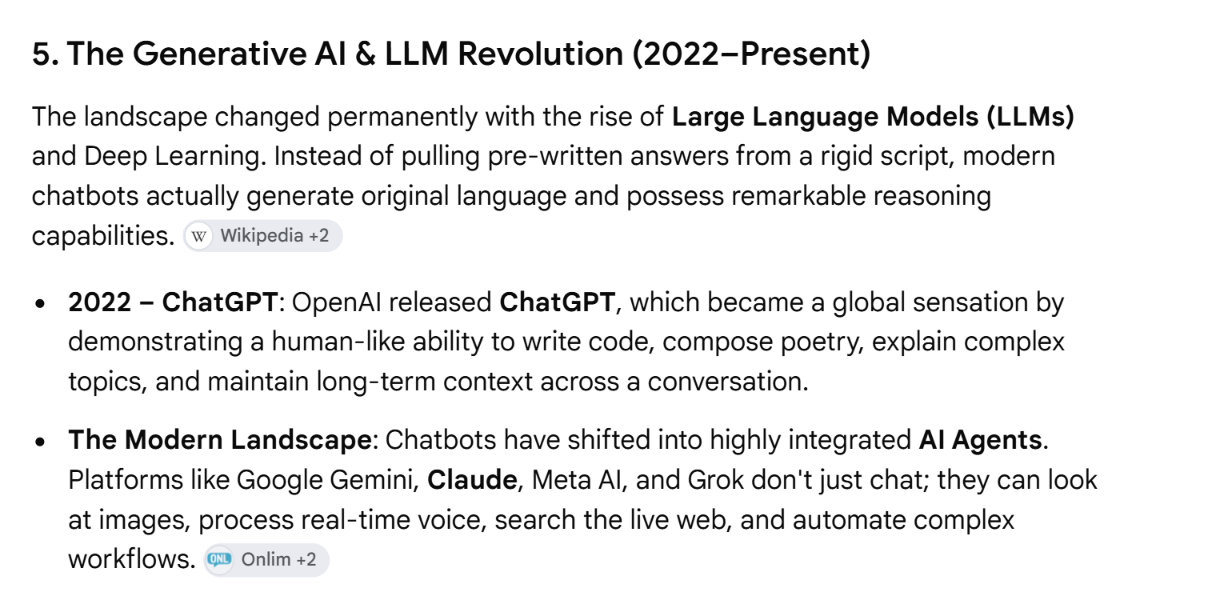
1. Informational Citation
This type of citation refers to a web page or document that AI uses to support a factual claim, explanation, or summary. It allows users to verify information and often appears alongside several sources at once for a single statement.
2. Product Citation
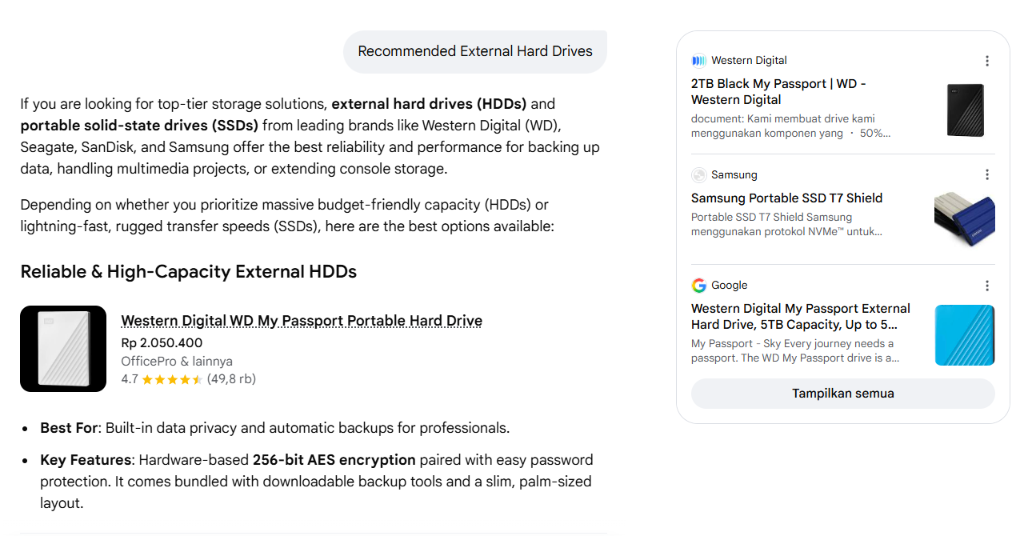
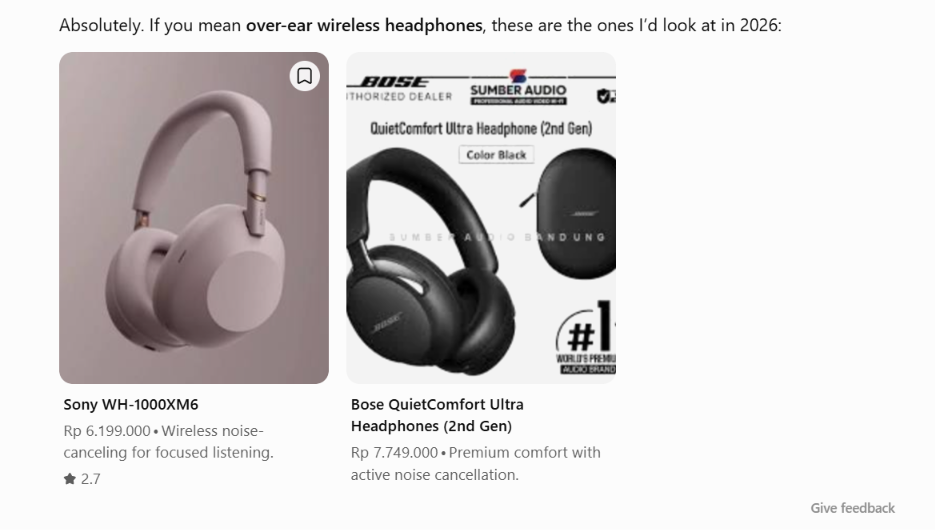
A product citation is a link to a product page that appears within an AI answer, for example in Google AI Mode. It lets users click directly through to a marketplace page straight from the AI's response.
3. Multimedia Citation
Unlike the two above, this type of citation refers to a source image, video, or other multimedia content. On ChatGPT, for instance, this citation appears through an image carousel, letting users see the original source after clicking on the image.
Where Does AI Get Its Citations From?
Before trying to earn AI citations, it's important for you to first understand where these linked sources actually come from. That's because your business isn't just competing with other blog articles, but with the entire information ecosystem that exists on the internet.
Generally, AI pulls its answers from the following types of sources:
- Web content, such as blog articles, guides, landing pages, and other in-depth writing.
- Structured sources, such as Wikipedia, documentation hubs, and product data feeds.
- Forums and UGC, such as discussions from Reddit, Quora, and similar community platforms.
First-party data, such as a brand's official website, help center, and other official resources.
How to Earn AI Citation
Now that you know where AI pulls its sources from, it's time to lay out the steps to get your business content into that ecosystem. Here's how to earn AI citations for your business or company:
1. Publish Content Worth Citing
Focus on in-depth research, case studies, thought leadership, timely news content, and high-quality brand information. Avoid poetic or ambiguous language, state relevant information clearly, and write each paragraph so it can stand on its own, making it easier for AI to cite.
2. Build Brand Reputation and Authority
Gather customer reviews and testimonials, run digital PR, build links from trusted websites, and demonstrate expertise through consistent content. The more credible your brand is in the public eye, the greater the chance AI will consider it worth citing.
3. Make Sure Your Content Is Accessible to AI Crawlers
Reduce reliance on JavaScript rendering, make sure content isn't locked behind a registration wall, and consider creating an llms.txt file so AI systems can more easily understand your site's structure.
4. Apply SEO Practices and Schema Markup
Maintain crawlability, indexability, and content quality according to SEO best practices. Add schema markup in JSON-LD format, such as Article schema or Product schema, so AI engines can read and display your data more accurately.
5. Prepare a Product Feed If Relevant
For businesses with a product catalog, build a structured product feed in XML format and submit it to Google Merchant Center or Microsoft Merchant Center to give your products a chance of appearing as a product citation.
Read also: What Is llms.txt? Examples, How to Create It, & Its Impact on GEO
The Differences Between AI Citation and AI Mention
So, what actually sets an AI mention apart from an AI citation? The main difference lies in source attribution. A mention tells the audience that your brand exists and is relevant, while a citation tells them where to go next.
Aspect | AI Mention | AI Citation |
| Format | Brand name within the text, without a link | URL, footnote, or inline source card |
| Signal | Brand awareness, category association | Content authority, source credibility |
| Traffic Impact | Indirect, influences branded search | Direct, clickable referral |
| Frequency | Appears more often | Rarer, more competitive |
| Main Platform | All LLMs, including those without web access | Perplexity, Google AIO, ChatGPT with web search |
| Optimization Tactics | PR, third-party coverage, community presence | Content structure, schema, authoritative data |
How Do You Check AI Citation?
So, how do you find out whether your brand has been cited by AI or not? There are various tools you can use to do AI citation monitoring, ranging from free to paid. But using a tool alone isn't enough; you also need to know how to read AI citation data so you know your next optimization steps, rather than just staring at numbers with no clear direction.
If you need a practical AI citation tracker, try the FREE AI Visibility Audit by cmlabs. Our team of experts will assess your brand's overall visibility across various AI search platforms, including AI citation and other components, at absolutely no cost. You can receive the results in as little as 3–5 business days.
Be a Trusted Source AI Can Cite with cmlabs!
Understanding how AI citation works is only the first step toward boosting your brand's visibility in the age of AI search. To get the best results, your business needs a strategy that's both measurable and consistent, and you must also know how to analyze citation gaps in AI platforms.
To help you secure that opportunity, cmlabs offers AI Search Optimization Services (GEO/AEO), covering several key aspects to help make your brand more trusted by AI, including:
- AI-native content strategy designed to be easily extracted and cited by AI systems.
- Measurable tracking of AI share of voice across ChatGPT, Perplexity, and Google AI Overviews.
- An initial consultation to map out your brand's challenges and visibility goals.
- Analysis and strategy planning based on your business's digital ecosystem.
- Execution and monitoring with reports you can track on a regular basis.
If you're ready to compete in the age of AI search and boost your brand's chances of showing up as an AI reference, contact our team today to discuss your business's challenges and goals
Read also: What Is Answer Engine Optimization (AEO)? A Guide to Optimizing Business

Risca Fadillah
Thank you for taking the time to read my article! At cmlabs, we regularly publish new and insightful articles related to SEO almost every week. So, you'll always get the latest information on the topics you're interested in. If you really enjoy the content on cmlabs, you can subscribe to our email newsletter By subscribing, you'll receive updates directly in your inbox. And hey, if you're interested in becoming a writer at cmlabs, don't worry! You can find more information. here So, come join the cmlabs community and stay updated on the latest SEO developments with us!
Subscribe to Our Newsletter
Enter your email to receive news from us