As an SEO Writer, I stay up-to-date with the latest SEO practices and industry insights to craft content that is search-optimized, credible, and genuinely valuable, designed to perform at its best on SERPs.
Collaborator

Scarcity Marketing: Benefits, Examples & Strategy for Business

Consumers don't always make a purchase or sign up for a service just because the product is good. Timing, availability, and the fear of missing out on an opportunity can also influence their decision. That's why a scarcity marketing strategy is widely used by businesses to promote their products and services.
Scarcity marketing is a marketing approach that encourages potential customers to make decisions faster, whether that means buying a physical product, using a service, or taking some other action.
However, this approach can't be applied carelessly. Misleading restrictions can actually damage customer trust. So, let's explore scarcity marketing examples, along with its benefits, types, and how to apply the right strategy for your business.
What Is Scarcity Marketing?
Scarcity marketing is a marketing strategy that highlights limitations, whether in quantity, time, capacity, or access, so that those limits become part of what consumers weigh when making a purchase. These limitations can come from stock levels, production capacity, schedules, or the terms of an offer.
This strategy works on a psychological level, because when consumers know an option may soon become unavailable, they tend to feel they need to buy it right away.
In other words, scarcity marketing is effective at triggering the fear of missing out (FOMO) and the fear of being left behind when others get an opportunity you don't. After all, consumers also tend to see scarce items as more valuable.
That being said, scarcity marketing is different from exclusivity, which typically limits who can access an offer, such as members only. Instead, scarcity marketing limits how much, when, or for how long an offer is available.
Read also: Digital Branding: An Investment in Digital Competition
Scarcity Marketing Examples
Scarcity marketing can work for all kinds of businesses. What matters is that you communicate real limits in clear language and give people a nudge to act (a call to action). Here are some scarcity marketing examples across different contexts:
1. E-commerce Flash Sales and Low-Stock Alerts
Online stores often combine time limits and stock limits on product pages or in promo materials. Together, they make shoppers feel they need to buy right now, before the flash sale ends.
Copywriting examples:
"2-Hour Flash Sale! Up to 40% off ends tonight at 11:59 PM."
"Only 5 units left. Grab yours before they're gone."
2. Limited-Edition Launches and Special Pricing
Products with a production run announced from the start, and no restocks afterward, are usually great at getting buyers to act faster.
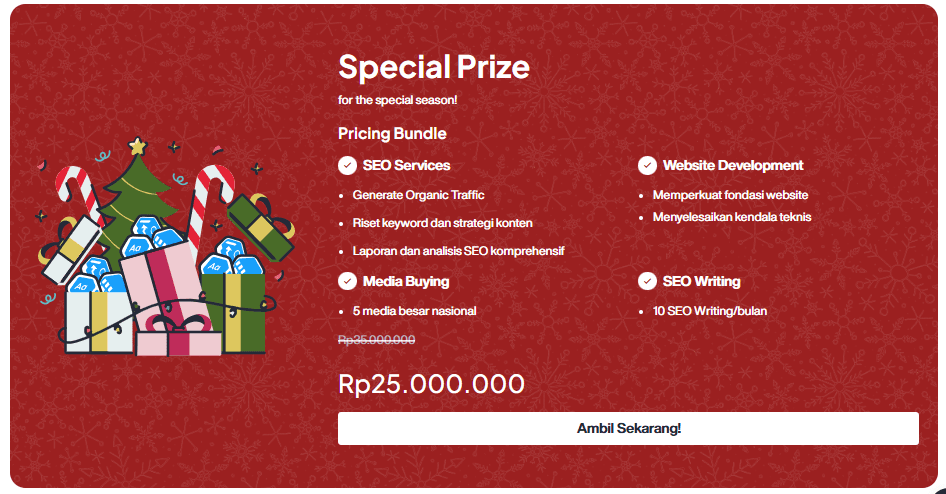
Special pricing during key moments like Christmas, New Year, or Ramadan also gives consumers a reason to buy or sign up for a service right away.
For example:
3. Events, Webinars, and Classes with Limited Capacity
Venues or sessions with a real attendee cap can openly show how many spots are left. This builds FOMO and urgency, nudging people to register sooner. Here are some commonly used copywriting examples:
"Workshop limited to 30 participants. 12 seats left."
"Registration closes November 20 & as soon as the spots fill up."
4. Services with Limited Client Slots
Service businesses have limited capacity, so sharing how many slots are available (or still open) is a smart scarcity marketing strategy that pushes prospects to take action, like this:
"We only take on 5 new clients each month. December has 2 slots left."
5. Exclusive Access and Early Access
Access restrictions make an offer available only to certain groups, such as members or selected participants. This approach can be combined with time-based scarcity to give loyal customers extra value.
Here's how it might look:

Read also: Brand Awareness Campaign & Some Examples from Reputable Brands
Benefits of Scarcity Marketing for Your Business
Here are the benefits and goals you can achieve through scarcity marketing:
- Boosts the perceived value of your product.
- Creates a sense of urgency.
- Increases demand because the offer feels more exclusive.
- Encourages impulse purchases.
- Improves conversion rates.
- Strengthens customer loyalty.
- Increases brand visibility, since limited-time discounts tend to get talked about on social media.
Types of Scarcity Marketing
Scarcity doesn't always come from having few products, which is why there are many different types of scarcity marketing, including:
1. Physical Scarcity
This type is tied to a genuinely limited supply, whether because production is capped or warehouse stock is running low. It works best for products that truly come in limited numbers, collaboration products, or seasonal items.
2. Time Scarcity
Companies create offers that are only valid for a set period, from a few hours to a few days or even a few weeks. Flash sales and seasonal discounts also fall under this type.
3. Social Scarcity
Scarcity comes from the perception that lots of people are interested in a product or have already bought it. Seeing this pushes shoppers to buy before it sells out. Labels like "Best Seller" and "Few Left" are the most common examples.
4. Utility Scarcity
This type builds the perception that a product or service only delivers its benefits under limited conditions, timing, or quantities. In other words, you only get the best results within those limits. For example, a free bonus consultation that's only available to people who sign up in a certain month.
5. Exclusive Scarcity
A product or service is only available to a specific group of consumers, or to those who meet certain criteria. This restricted access makes your offer feel special.
Read also: The Role of Brand Advocacy Marketing & Tips to Build It
Apply More Strategic Scarcity Marketing with cmlabs!
Designing a scarcity marketing strategy takes more than showing a countdown timer or a limited quota. You need to understand your audience, set the right limits, and measure the impact on sales.
This is where Digital Marketing Services by cmlabs can help your business plan and run focused and measurable campaigns.
As part of these services, we also offer Meta Ads and Social Media Management Services to help your business grow across digital channels. Our Meta Ads Service goes beyond just creating ads. We build structured campaigns that follow the consumer journey, from awareness all the way to conversion.
Meanwhile, our Social Media Management Service is built on data and consumer insights, so your content strategy isn't just making noise, but also meeting your audience's actual needs.
So, what are you waiting for? Consult with our team for free to learn about our services and find the scope that best fits your business goals and needs.

Risca Fadillah
Thank you for taking the time to read my article! At cmlabs, we regularly publish new and insightful articles related to SEO almost every week. So, you'll always get the latest information on the topics you're interested in. If you really enjoy the content on cmlabs, you can subscribe to our email newsletter By subscribing, you'll receive updates directly in your inbox. And hey, if you're interested in becoming a writer at cmlabs, don't worry! You can find more information. here So, come join the cmlabs community and stay updated on the latest SEO developments with us!
Subscribe to Our Newsletter
Enter your email address to receive notifications about the latest newsletters by cmlabs.