As an SEO Writer, I stay up-to-date with the latest SEO practices and industry insights to craft content that is search-optimized, credible, and genuinely valuable, designed to perform at its best on SERPs.
Collaborator

Google Ads Types & Finding the Right One for Your Business
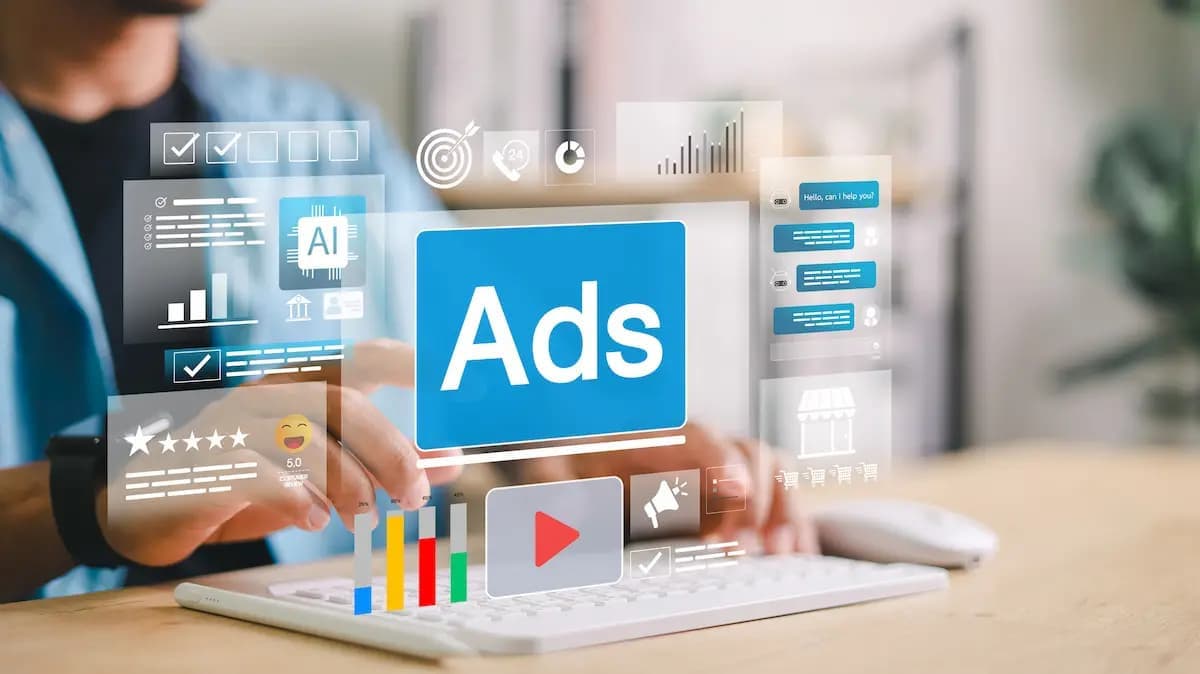
Google Ads is one of the most widely used paid advertising platforms across businesses of all sizes. However, many advertisers launch campaigns without fully understanding how it works.
It is important to note that there are several types of Google Ads campaigns available, each with fundamental differences. If you choose the wrong ad type, you may run out of budget before reaching your goals and fail to generate conversions.
Each type of Google Ads is designed for different purposes. Some formats are more effective at capturing purchase intent, some are suitable for building broad brand awareness, and others are specifically used to promote mobile apps.
So, before determining the right advertising strategy, you need to understand the various types of Google Ads and their differences. To that end, check out the following article!
What Is Google Ads and Why Is It Important for Businesses?
Google Ads is Google’s paid advertising platform that allows businesses to display ads to relevant users on Google Search, YouTube, Gmail, and millions of partner sites.
For online business owners, Google Ads certainly offers many benefits. If you are not yet aware of them, here are several reasons why the Google Ads platform is important to optimize in your digital marketing strategy:
- According to data from StatCounter Global Stats, Google holds nearly 90% of the global search engine market share, giving its ads an extremely wide reach.
- Ads are shown only to audiences actively searching for products or services similar to those you offer.
- The pay-per-click (PPC) system ensures you pay only when a user clicks your ad.
- Campaign results are fully measurable, from the number of impressions and clicks to the conversions generated.
- Budgets can be flexibly adjusted, whether daily or per campaign, with no minimum requirement.
How Google Ads Works
Before deciding on the ad format to use, it is a good idea first to understand how the Google Ads system works. Generally, the process is far more complex than simply paying to have ads appear on the search results page.
Every time someone searches on Google, the system automatically evaluates all advertisers bidding on relevant keywords.
Then, Google assigns each keyword a Quality Score based on the ad’s relevance to the search, the quality of the landing page, and the advertiser’s historical account performance.
This means that just having a large ad budget is not enough to secure a position on the SERP (Search Engine Results Page). After all, ad relevance and quality have been proven to play a crucial role in determining the results.
Ad budgets should also be managed according to the campaign level, so advertisers can allocate their investments based on business priorities. It is this flexibility that makes Google Ads relevant and easily adaptable, whether for small businesses or even large corporations.
Read also: How to Calculate ROAS and Tips to Get Maximum Profit
The Most Commonly Used Types of Google Ads
Generally, there are 5 types of Google Ads most frequently used by advertisers in Indonesia. Each type has a different format, placement, and objective. Here is an explanation of each type.
1. Search Ads
Search Ads are text-based ads that appear on Google’s search results page. They look similar to regular organic URLs but are labeled “paid ads” at the top or bottom of the search results page.
These ads operate based on keywords and appear when users search for terms relevant to your business. Since they appear during active search moments, Search Ads are highly effective at capturing audiences who are already in the consideration-to-purchase decision stage.
For example, an audience typing keywords like “interior design services Jakarta” typically demonstrates clear intent, as they are actively searching for interior design services, and your ad simply needs to appear at the right moment with a relevant offer.
Practically speaking, this type of ad consistently generates the highest conversion rates compared to other formats for professional services. So, if your business operates in the service sector, such as legal consulting, clinics, or renovation services, Search Ads are the best choice.
2. Display Ads
Display Ads are visual ads that appear on over 200 million websites, apps, and videos within the Google Display Network. Their formats vary, ranging from banners, static images, and animations to text that appears within page content.
This type of ad is also considered the most effective for building brand awareness and running remarketing campaigns targeting users who have previously visited your site.
Although their click-through rate is lower than that of Search Ads, Display Ads have proven effective at keeping your brand top-of-mind for potential customers who are not yet ready to make a purchase.
If your brand is just getting started, you can combine both approaches. Use Display Ads to introduce your brand and Search Ads to capture purchase intent, as this combination has been shown to yield a higher conversion rate than relying on just one format.
3. Shopping Ads
Shopping Ads display products visually right on the search results page, complete with product images, prices, and store names. The ad data in Shopping Ads is also automatically pulled from Google Merchant Center based on the product catalog uploaded by the advertiser.
Therefore, Shopping Ads can be said to be the most ideal ad type for retail and e-commerce businesses that want to showcase physical products directly to potential buyers, as they can convey product information even before users click on the ad.
For e-commerce businesses with many product variants, Shopping Ads can also be a far more efficient option compared to Search Ads because they do not require writing ads one by one.
Tips: If you sell popular products, such as electronics or clothing, make sure product prices and images are optimized in Merchant Center. These two elements are the primary determinants of the click-through rate for Shopping Ads.
4. Video Ads
Video Ads are typically displayed on YouTube in various formats, such as skippable in-stream, non-skippable, bumper ads, and in-feed ads. Each of these formats has distinct characteristics in terms of duration and placement.
This type of video ad is ideal for businesses that want to convey a message visually and build a connection with their audience.
If your target audience is the younger generation or a consumer segment that is active on YouTube, skippable in-stream video ads are the ideal choice, as you only pay for ads if users watch them for more than 30 seconds.
For businesses looking to build trust through product demonstrations or testimonials, or to run campaigns to boost brand consideration and awareness on a large scale, video ads are far more persuasive than text or image ads.
5. App Ads
App Ads are specifically designed to promote mobile apps. This advertising system works by retrieving data from the advertiser’s Play Store listing, then automatically testing various ad creative combinations to identify the most effective strategy.
This type of ad can appear on Google Search, YouTube, Google Play, and even Google Discover within a single integrated campaign. App Ads are most effective for app-based businesses, such as fintech platforms, edtech platforms, or delivery services.
If your main goal is to increase downloads, you can choose the App Installs subtype. However, if users have already downloaded the app but are rarely active, you can use the App Engagement subtype to encourage in-app interaction.
Read also: Advertorial Ads: Definition, Types & How to Create It
Types of Advanced AI-Powered Campaigns
In addition to the five types of Google Ads mentioned above, there are also types of Google Ads campaigns that run automatically and are powered by artificial intelligence.
You should be familiar with these types of ads because they are often chosen by Ads Specialists who want to optimize more efficiently without having to manage them manually.
1. Performance Max
Performance Max is a type of Google Ads campaign that uses Google’s artificial intelligence to optimize ad delivery across all channels simultaneously within a single campaign.
Advertisers simply provide creative assets and set conversion goals, then the algorithm manages the rest automatically.
This campaign is ideal for advertisers who want to reach audiences across multiple platforms without managing each campaign separately.
Additionally, Performance Max’s features and systems can help optimize budgets and bids in real-time to secure the best available conversion opportunities.
2. Smart Campaign
Smart Campaign is an AI-powered advertising solution from Google designed specifically for small businesses and new advertisers.
This campaign serves as a cross-channel ad management hub, eliminating the need to create separate campaigns for each targeted platform.
Although its settings are more limited compared to other formats, Smart Campaign still offers helpful automation features, including smart bidding and many others.
This type of campaign is ideal for businesses that are just getting started with digital advertising and may not have a dedicated team to manage daily ad operations.
Read also: What Is Budgeting Ads and How to Manage It? Check It Out!
How to Choose the Right Google Ads Campaign Type
With so many options available, it is natural to wonder: where should you start? The answer depends on your business goals, not on the most popular ad format.
If you choose the wrong ad format, you will not only waste your ad budget but also indirectly slow down your business growth. Therefore, understanding each type of Google Ads campaign available is indeed quite important.
However, it is even more important to understand the specific campaign goals, who the target audience is, and what action you expect them to take after seeing the ad. Here is a brief guide you can use as a reference:
- Want to reach an audience actively searching for your products or services? Use Search Ads.
- Want to build broad brand awareness across various sites? Choose Display Ads.
- Selling physical products online and want to appear directly on search results pages? Shopping Ads are the right choice.
- Want to convey your brand message visually and build a connection with your audience? Rely on Video Ads.
- Want to increase mobile app downloads? Use App Ads.
- Want optimal results across multiple platforms simultaneously with efficient management? Consider Performance Max.
It should be noted that there is no single format that works perfectly for all types of businesses. In fact, in some cases, combining several types of Google Ads campaigns can generate better results than relying on just one format.
Read also: 4 PPC Bidding Strategies to Maximize ROI, Check Them Out!
Manage Google Ads More Strategically with a Data-Driven Approach
Understanding the types of Google Ads and their functions is a fundamental and crucial step. However, the factors that determine whether your campaign truly makes an impact and does more than just burn through your budget are the strategy and execution behind it.
Every ad format essentially has great potential. However, the results heavily depend on the keyword analysis and research conducted, the relevance of the landing page targeted by the ad, and the accuracy of the audience segmentation established from the start.
Without mastering these elements, your ad budget could be spent without generating meaningful conversions. This is where SEM Services by cmlabs can help your business. cmlabs has extensive experience and a proven track record in managing cross-industry campaigns.
We can help you manage your Google Ads campaigns using a data-driven approach, from competitor research and keyword selection to creating landing pages optimized for conversions.
With a data-driven approach and a deep understanding of the latest algorithms, our team is ready to help your business achieve more measurable and impactful advertising results.
If you would like to discuss the best advertising strategy for your business, feel free to contact the cmlabs team now and get the ideal strategy for your campaign or ad!
Read also: Target CPA vs. Target ROAS: Which Strategy Is Best?

Risca Fadillah
Thank you for taking the time to read my article! At cmlabs, we regularly publish new and insightful articles related to SEO almost every week. So, you'll always get the latest information on the topics you're interested in. If you really enjoy the content on cmlabs, you can subscribe to our email newsletter By subscribing, you'll receive updates directly in your inbox. And hey, if you're interested in becoming a writer at cmlabs, don't worry! You can find more information. here So, come join the cmlabs community and stay updated on the latest SEO developments with us!
Subscribe to Our Newsletter
Enter your email to receive news from us