Local SEO Strategies to Drive More Traffic for Local Businesses
Cover image: Illustration of Local SEO Strategies to Drive More Traffic for Local Businesses.
Every day, thousands of people use Google to search for products or services in their area. The question is, does your business appear in those search results? If you are unsure about your on-page SEO strategy, now is the time to implement local SEO.
Local SEO is a strategy used by business owners to attract local visitors. Want to understand how it works and its strategies in depth? Check out the explanation below!
What Is Local SEO?
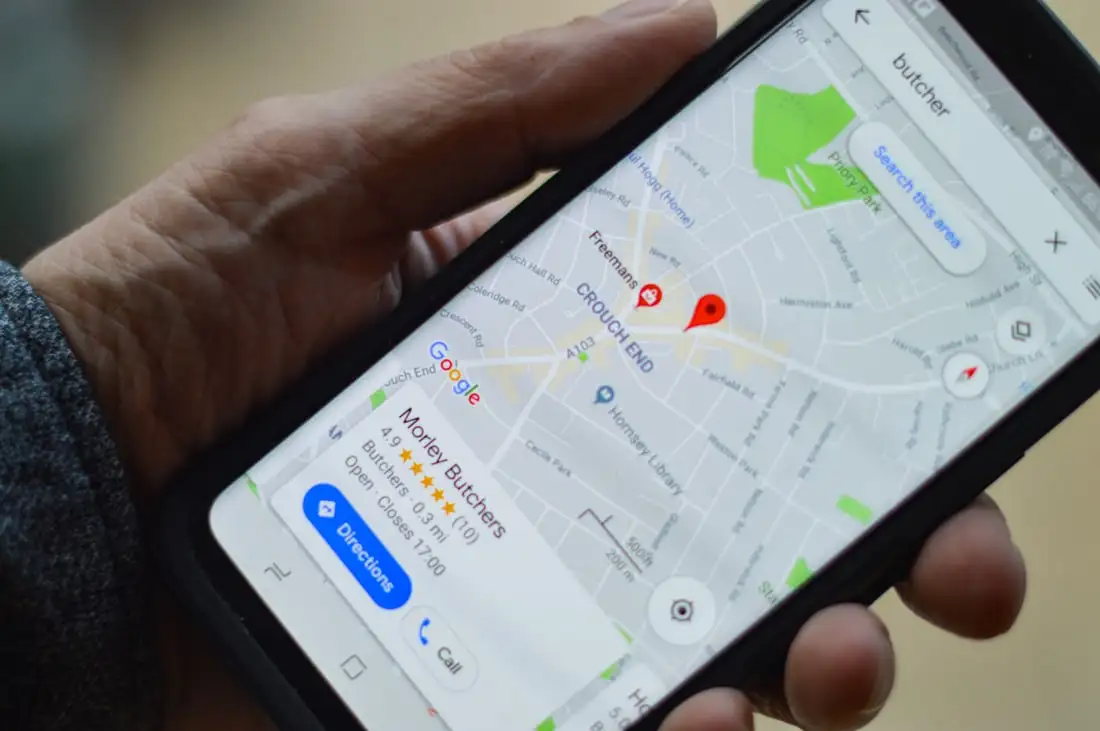
Local SEO is a strategy to boost a business’s visibility in location-based search results, such as “beauty clinic in Semarang,” “women’s gym in West Jakarta,” and “nearest laptop repair.”
In local SEO, general SEO practices like keyword optimization, backlinks, and meta descriptions are still applied, but with an added location layer. While the goal of SEO is to rank in search engines, the goal of local SEO is to rank and have your brand appear in the user’s immediate area.
Why is local SEO important? Many people use search engines to find information about local businesses before visiting and making a purchase. If your business can be found in local search results, your chances of being chosen increase significantly. Moreover, users with local intent are generally ready to buy, so the potential value is higher.
How Local SEO Works
To understand how Google’s local SEO works, there are two distinct contexts: ranking on Google Maps and ranking in regular search results (organic search). Here are the differences:
1. How Local SEO Works on Google Maps
When users search for information using location-specific keywords, Google uses a combination of the following three factors:
- Relevance: How well a business matches what the user is searching for.
- Distance: How close the business’s location is to the user.
- Prominence (popularity and trust): How well-known and trusted a business is.
2. How Local SEO Works in Organic Search
Furthermore, when ranking web pages in organic search, Google considers the following factors:
- Relevance (content relevance): Assessing whether the web page addresses the user’s intent (search intent) or not.
- Quality (content quality): How helpful and trustworthy the content is. This relates to the depth of discussion, accuracy of information, and clarity of structure.
- Usability (user experience): How user-friendly the website is. This is typically influenced by loading speed, mobile-friendliness, and clear navigation.
Read also: How To Increase Organic Traffic (Complete Guideline)
Essential Tools in the Local SEO Workflow
In the local SEO workflow, several tools can help you with research, execution, and evaluation. Here are a few of them:
1. Google Trends
During the research phase, you can use Google Trends to understand search interests by region. In fact, Google Trends offers more specific geographic analysis capabilities, ranging from the national level down to the provincial level.
These tools will help you identify trends or terms frequently used by audiences in your target market. The insights you gain from Google Trends can be applied during the execution phase to make your business more “visible” to local audiences.
2. Google Business Profile
As you move into the execution phase, you need to build your brand presence using Google Business Profile (GBP). The latest edition of Whitespark’s Local Search Ranking Factors Survey states that GBP is the most influential factor in local SEO, followed by reviews.
This comes as no surprise, as GBP is the primary source of business data on Google. With this tool, you can manage all business information, from the business name, address, phone number, operating hours, photos, to services. Furthermore, you can also read and respond to customer reviews.
3. Semrush Local
After establishing your brand presence, you need to optimize and expand your local SEO efforts. One way to do this is by using Semrush Local. This tool serves as a control center to monitor and improve overall local SEO performance. Some of its features include:
- Map Rank Tracker: Helps track your business’s position on Google Maps and view rankings based on specific locations.
- Review Analytics: Helps collect reviews from various platforms, view average ratings, and compare them with competitors.
- Competitors Review Report: Shows the number of reviews, ratings, and response rates of competitors.
- Listing Management: Helps distribute business data to over 150 directories and ensures NAP (Name, Address, Phone Number) consistency.
4. Google Search Console
Next, an essential tool for running local SEO is Google Search Console (GSC), which helps monitor website performance on Google Search. GSC displays data such as the number of page impressions, clicks, and CTR (click-through rate).
Through this tool, you can also identify keywords driving traffic and detect technical issues such as unindexed pages or crawling errors.
5. Google Analytics
In general SEO, Google Analytics is an essential tool. This is because it tracks the number of visitors to your website (traffic), their activities on the site (behavior), and whether they complete key actions leading to purchases (conversions).
As for local SEO, you can gain insights into how much traffic comes from local searches. You will also be shown which pages are most effective at attracting local visitors.
Read also: SEO Strategy for LLM, Building Online Presence in the AI Search Era
Strategies for Implementing Local SEO
To ensure your Google local SEO runs optimally, try implementing the following strategies:
1. Conduct Local Market Research
First, you must conduct keyword and competitor research. This is important for determining your business name. Be sure to consider keywords frequently searched by your local audience and your competitors’ positioning.
Next, take note of how Google groups business areas, such as food districts, medical complexes, and so on. You can see this on Google Maps or in local search results. This insight will help you determine where your business should be positioned.
In addition to relying on the tools above, you can also conduct surveys or polls to understand the needs and preferences of real users.
2. Develop a Content Strategy
In local SEO, content is not limited to articles but also includes photos, videos, audio, and even apps. Its distribution must also be cross-platform, whether on websites, social media, external blogs, podcasts, community forums, or other channels.
To optimize content performance, tailor the format to the habits and preferences of the local audience. This is why market research conducted in the first phase is so important. Keep in mind that content is not only intended to attract traffic but also to build authority and trust. So, ensure the strategy is consistently implemented and actively developed.
Read also: How to Create a Content Strategy for Optimal Business Growth
3. Develop a Website
As a crucial foundation for Google local SEO, a website must be informative, relevant, and optimized for local search. Here are key points for optimizing a local business website:
- Ensure there is information about products or services, location, and how buyers can contact the seller.
- Create a clear page structure, including a home page, about page, contact page, product/service pages, and testimonials or reviews.
- Optimize the SEO elements on each page, from title tags, headings, main content, and meta descriptions to internal links.
- Always use geographic keywords to link your services to a specific location, such as “pet shop in Karawang.”
- Acquire backlinks from local websites, reputable media outlets, or relevant directories. This will help boost your website’s credibility in Google’s eyes.
- Use schema markup to improve visibility in search results and support rich results.
- Ensure content is presented clearly and in a structured manner so as to be ready to adapt to AI advancements.
4. Protect Your Google Business Profile from Spam
In fact, local SEO requires not only optimization strategies but also defensive strategies, one of which involves addressing fraudulent practices or spam that can damage a business’s rankings and reputation.
Typically, spammers manipulate their own business information to appear at the top of search results. They may also target competitors by posting fake negative reviews, editing other businesses’ listings, and so on.
To protect your business, monitor your listings regularly and ensure the data remains accurate. You can also monitor competitors to look for suspicious listings. If you find any, do not hesitate to report them to Google.
5. Build and Manage Citations
A citation is a mention of business information on the internet. In practice, citations are divided into two types: structured and unstructured citations.
Structured citations are business listings in official directories such as Facebook, Nextdoor, and Yelp. These listings include the business’s name, address, and phone number (NAP). If citations are consistent across various platforms, your business’s digital footprint will expand, increasing the likelihood of appearing in search results frequently.
Meanwhile, unstructured citations are mentions of your business outside formal directories, such as news outlets, community forums, and local blogs. Their format does not always include complete NAP information but rather takes the form of more natural content. To obtain them, you can collaborate with local businesses, participate in community activities, or write guest posts.
6. Be Active in Social Media Communities
Nowadays, many people seek product or service recommendations through social media. Therefore, brands must actively engage in conversations there, whether by responding to mentions, replying to comments, or participating in community discussions. Additionally, ensure you respond to your audience quickly and in a communicative manner.
The methods above are crucial for building rapport and fostering audience trust in the brand. If done consistently, they have great potential to boost brand recognition.
Given the importance of local SEO in boosting visibility and conversions, now is the time to execute it more carefully. If you need a partner with experience in handling SEO across various business sectors, cmlabs is the answer.
cmlabs offers SEO services that involve an in-depth, data-driven approach aligned with Google’s guidelines. Through our local SEO services, our team of experts is ready to help your brand achieve high authority and reputation, both in the minds of consumers and on search engines.
Ready to get the best offer from us? Contact us now for a consultation and find the best SEO solution tailored to your business needs!
Read also: 8 SEO Trends in 2026 & Strategies to Keep Your Brand Relevant

cmlabs
Subscribe to Our Newsletter
Enter your email to receive news from us