As an SEO Writer, I stay up-to-date with the latest SEO practices and industry insights to craft content that is search-optimized, credible, and genuinely valuable, designed to perform at its best on SERPs.
Collaborator

Good SEO Is Good AIO? Google's Danny Sullivan & John Mueller’s Perspective on SEO for AI
AI is everywhere, and many, many, many brands and website owners are scrambling to “optimize” for it. Well, sorry to gently nudge your expectations here, but Google just politely burst that bubble.
Yes, indeed, AI is slightly changing how people search, but not quite in the way you might imagine.
In a conversation on Google’s Search Off the Record podcast, John Mueller and Danny Sullivan (the most well-known public figures from Google’s Search team, who often act as bridges between Google and the SEO community) revealed a truth.
They said, AI SEO is not a new discipline. Yup, there is no new magical playbook, nor secret AI cheat code.
Instead, they said, SEO for AI works on the same foundation as traditional SEO. Rather than obsessing over any AI search shortcuts, Google is reminding website owners and creators to go back to the basics.
Build content that is meaningful, useful, and authentic. Share real experiences, offer genuine value, and speak to actual people.
AI may help shape how information is presented, but it does not change what great content actually is. And that is just the beginning. We will help you find out more interesting truths from Google’s discussion, so stick to the end!
Danny Sullivan x John Mueller's Perspective on SEO, AEO, AIO, GEO & LMNOPEO
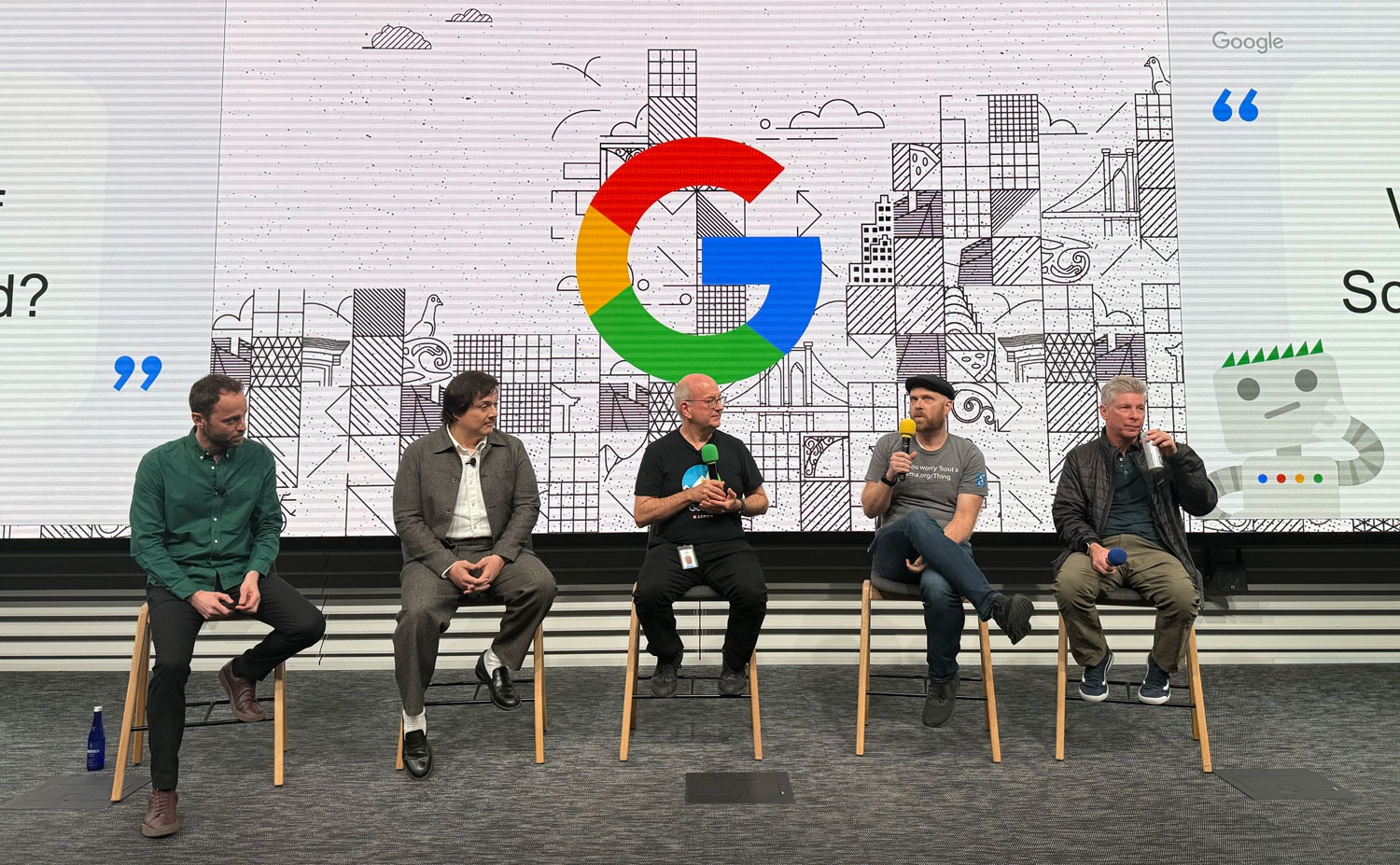
If you are feeling overwhelmed by the endless parade of new acronyms like AEO, AIO, GEO, or whatever buzzword someone invents next week, Danny Sullivan and John Mueller basically tell you to relax.
The rules haven’t changed as dramatically as the hype makes it seem. According to them, AI-powered search is not a whole new marketing universe. It’s… just…SEO, with a different layer of outfit.
AI might package results differently, but the foundation is still the same. You are advised to build genuinely helpful, original, authentic content that real humans actually care about.
Instead of obsessing over chasing the latest search optimization strategy, they argue you’ll get farther by doubling down on relevance, expertise, and honesty.
Why? Because AI systems are already great at regurgitating generic information, but they really can’t replicate human experience or data-based, factual insight.
Read also: SEO Strategy for LLM, Building Online Presence in the AI Search Era
Key Messages from Google’s Search Off the Record Podcast Ep. 102
Below are the essential messages, strategic perspectives, and clarifications discussed in the episode:
1. Traditional SEO fundamentals have not changed simply because artificial intelligence is being incorporated into search experiences.
2. Optimizing for “AI Search” features like AI Overviews or AI Mode doesn’t mean abandoning the core principles of SEO.
3. Terms like AIO, GEO, and AEO represent evolving formats within search, but they should be understood as subsets under SEO, not divorced disciplines.
4. Despite changes in how results are displayed, the goal remains the same: to create valuable content that satisfies real user needs.
5. Expert commentary becomes far more valuable when it includes personal interpretation, lived experience, or unique viewpoints rather than rephrased information.
6. Many SEO professionals share that their clients demand “new AI SEO strategies.” Yet, Google reassures that the long-term strategic foundation remains unchanged and that Google’s AI search systems still derive from core SEO signals and content quality.
7. The ranking signals for AI search are the same as those used for traditional search. It focuses on relevance, expertise, authority, and quality.
8. Google encourages creators to stop chasing platform-specific tricks and instead prioritize audience value. Chasing new tricks solely for AI systems is unlikely to deliver long-term success.
9. Google’s AI systems aim to answer real people’s questions, so content should be created with humans in mind first.
10. AI search engines and generative features often reduce redundancy by summarizing widely available information. That being said, the commodity content (type of context that AI systems can already handle well without human involvement, e.g., factual summaries) that offers no unique perspectives may lose visibility in AI search features.
11. AI-enhanced search results are still grounded in the same indexing and relevance principles that govern traditional web search.
12. AI search features like Google’s AI Overviews are more about how answers are presented, not a replacement for the content itself.
13. SEO professionals should avoid writing content specifically to “game” AI result formats. Instead, they recommended writers focus on topics that answer real questions comprehensively and meaningfully.
14. Sullivan and Mueller cautioned against chasing ephemeral optimization tactics that offer short-term gains but detract from long-term usefulness.
15. When working with AI-influenced search, originality and unique value become even more important than before.
16. SEO and discoverability also benefit from multimodal formats, combining text, images, and video, as long as they add real value.
17. Google’s ranking systems still prioritize relevance signals that have been core to SEO for years.
18. Websites' content that focuses on clear explanations, unique viewpoints, and original research with expertise is more resilient in search visibility, even as AI results evolve.
19. Website owners should assess what makes their content distinctly valuable compared to others offering similar material.
20. Instead of obsessing over acronyms hype like AEO, GEO, and its algorithms, the priority should still be creating content that genuinely helps real users.
Read also: Google AI Search Mode: Impact & Website Performance Optimization
Good SEO Is Good AIO, AEO, GEO, & Other New Terms You Will Find
At the end of the day, all these acronyms (e.g., AIO, AEO, GEO, and even LMNOPEO, says Google) are really just variations of the same core principle. Yes, a good SEO.
If your content is genuinely helpful, original, well-structured, and created with your audience in mind, guess what? You’re already doing great “AIO,” you’re already winning at “AEO,” and you’re already future-proofing for “GEO.”
Google’s Danny Sullivan and John Mueller on the Search Off the Record podcast highlighted that those terms essentially describe aspects of the same long-standing SEO fundamentals you’ve always known. That being said, AI-related optimization should be thought of as a subset of SEO, not a replacement for it.
This means you don’t need to obsess over creating separate strategies for each new acronym. Instead, strengthen your foundational SEO practices by writing content with clarity, deepening expertise, structuring content for purpose, and expanding into diverse formats like video and audio, as long as they genuinely help users learn and engage better.
In short, good SEO is good AIO, AEO, GEO, and… LMNOPEO, or whatever comes next.
Because at the end of the day, they all come back to one principle: show up for your audience when they need you, and serve them with content that’s factual, expert-backed, genuinely helpful, and created with purpose.
If all of this sounds like a lot to do, you don’t have to do it alone. At cmlabs, we’ve worked with hundreds of brands, big, complex, and fast-growing, helping them build sustainable SEO strategies that actually work.
If you want to figure out and apply strong SEO principles while adapting to AI-driven search, our team of experts is ready to help design, execute, and optimize your strategy through our SEO Services. Also, it is a sure thing that our team is backed by proven experience and results.
So, contact our team for a free consultation, and let’s make your SEO future-proof, together.
Read also: AI for SEO: Impact, Uses, and Examples of Implementation

Risca Fadillah
Thank you for taking the time to read my article! At cmlabs, we regularly publish new and insightful articles related to SEO almost every week. So, you'll always get the latest information on the topics you're interested in. If you really enjoy the content on cmlabs, you can subscribe to our email newsletter By subscribing, you'll receive updates directly in your inbox. And hey, if you're interested in becoming a writer at cmlabs, don't worry! You can find more information. here So, come join the cmlabs community and stay updated on the latest SEO developments with us!
Subscribe to Our Newsletter
Enter your email to receive news from us